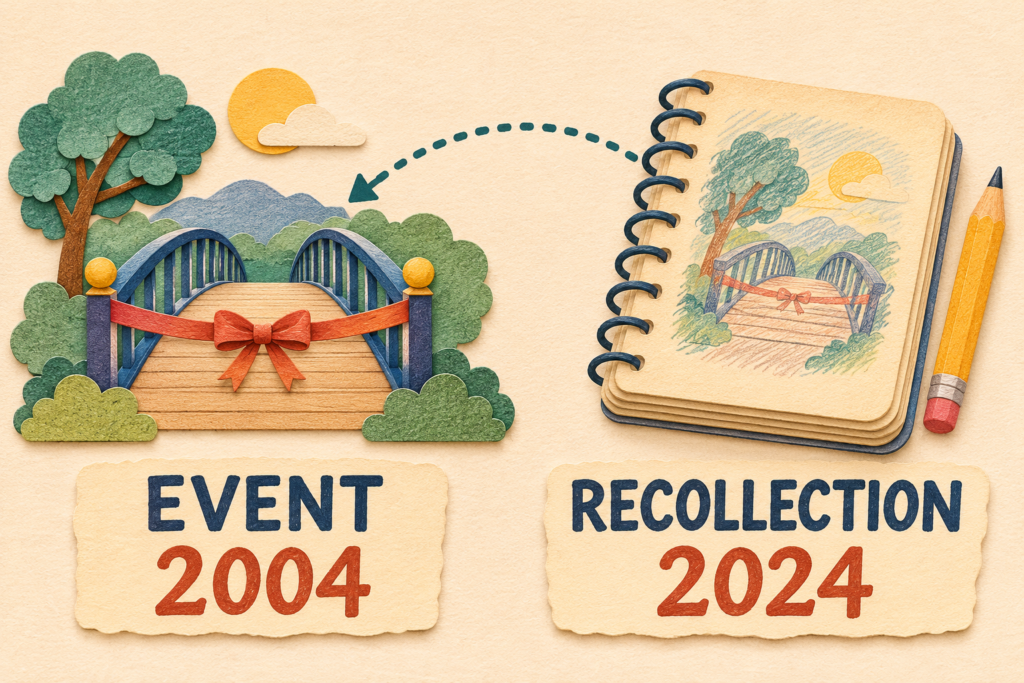
What does “explain your reasoning” leave unclear?
A student can add several sentences and still leave the important step unstated. “Explain your reasoning” becomes more useful when it names the claim being justified and asks about the connection the reader cannot yet follow. Before writing it, find out what the student thinks that connection is.
This worked example uses even and odd whole numbers. It is suitable for students who have already encountered grouping objects into pairs and the meanings of even and odd. It is not tied to a particular year level or curriculum. The tasks, responses and teacher comments are original practice material, not a report of classroom results.
AERO’s formative assessment guidance recommends asking students to walk through their thinking and using what you learn to guide feedback and teaching. In this example, that check helps distinguish a student who has omitted a reason from one who needs help developing it.
What is missing from this correct-looking response?
Give this claim: “The sum of two even whole numbers is even.” An invented student response says: “2 + 4 = 6 and 4 + 8 = 12. Both answers are even, so the claim is always true.” The calculations are correct, and both examples agree with the claim. Keep that success clear.
The missing step is the move from these two examples to every pair of even whole numbers. Adding 6 + 10 = 16 would provide another example, but it would not explain why no pair can produce an odd total. The task asks for a general reason, so the feedback should direct attention to what all even whole numbers have in common.
First ask, “How do you know a whole number is even?” Then ask the student to show what happens when two even groups are combined. They might use counters, draw pairs or explain aloud. If the explanation is already sound, the next task is to include it in the written response. If not, another request to write more will not teach the missing idea.
What comment gives the student a workable next step?
Try: “Your two calculations fit the claim. Now explain why it works for any two even whole numbers. Show what happens to the pairs when two even groups are combined. Could anything be left without a partner?” This identifies what is correct, names the scope of the claim and directs the student towards the relevant structure.
Use the prompt only if the student understands even numbers as complete pairs. Otherwise, revisit that idea with small groups first. Ask them to make pairs, identify any leftover and connect that observation to the words even and odd. Then return to combining groups. The number of examples is less important than whether the student can explain what the representation shows.
If a model is needed, distinguish teaching from the later independent check. You can show a pair-based explanation, ask the student to explain each step, and then change the claim. The guide to modelling a revision without giving away the answer offers another worked sequence for moving from a demonstration to independent practice.
What does a general explanation look like?
A possible explanation is: “Each even whole number can be grouped into pairs with nothing left over. When the two groups are combined, the existing pairs stay complete. Nothing is left without a partner, so the total is even.” The reasoning depends on the structure of any even group, not the size of one chosen example.
Contrast this with: “The sum is even because even plus even is even.” That repeats the claim. It has the word “because”, but does not explain why the claim holds. Ask, “Which part explains why there cannot be a leftover?” A student may need to refer to a drawing while making the connection explicit.
For students who already use algebra, the same reason can be expressed as 2a + 2b = 2(a + b), where a and b are whole numbers. The total is twice a whole number, so it is even. Do not require this notation if it obscures a sound verbal or visual explanation. Conversely, ask what the symbols mean if a student copies the equation without explaining it.
Include zero in the discussion if needed. Zero is even: it is twice zero and has no unpaired object. Combining a group of zero with another even group changes neither the pairs nor the total’s parity. An empty group is a valid case; the argument should not depend on both groups having visible counters.
How can you tell a substantial revision from a cosmetic one?
A cosmetic revision might add “This proves it” after the two calculations. Another might replace 2 and 4 with larger numbers. Neither supplies the missing general reason. A substantial revision explains why combining complete pairs leaves complete pairs, and connects that observation to the definition of even.
Ask the student to identify the sentence or part of the drawing that justifies “any two”. Check that the explanation covers the claim as stated. A drawing of four and six counters becomes a general argument only when the student explains why changing the number of complete pairs cannot introduce a leftover.
Do not demand extra words once the connection is clear. A short, precise reason can do the work. If the response has several unrelated problems, prioritising paragraph feedback provides a useful decision process, but the priority here is mathematical justification rather than sentence length or presentation.
What fresh task checks the reasoning?
Without the completed model beside them, ask students to decide whether this claim is true: “The sum of two odd whole numbers is even.” Require a justification using pairs and leftovers, not just a list of calculations. The printable sheet includes this task after the supported even-number example.
The claim is true. Each odd group contains complete pairs and one leftover. Combining two odd groups gives two leftovers, which form one more pair. All objects can therefore be paired. Watch for an answer that says “two odds make an even” without explaining what happens to the leftovers.
For a further check, ask about adding an odd whole number to an even whole number. The odd group contributes one leftover and the even group contributes none; combining their complete pairs still leaves that single object. The total is odd. These two changed claims make the leftover, rather than memorised wording, the thing to track.
If the student handles the first task but not the changed one, inspect their representation before deciding what to reteach. They may have lost track of a leftover, misunderstood odd, or remembered the model without understanding it. The fresh response gives a reason for your next teaching decision; it is not a guarantee that the idea will be retained in every later setting.
How can a department make reasoning comments more useful?
Use the record below to capture the claim’s scope, what the response already establishes, the missing connection and the next attempt. Keep the teacher question specific to the subject. “Explain what happens to the pairs” suits this example; it would not be a meaningful instruction for a historical argument or a chemical explanation.
The feedback comment bank can hold useful starting points, but avoid treating “justify your answer” as a complete intervention. Check the student’s understanding, choose the amount of support and leave time to use it.
When discussing a teacher-reviewed JeddAI workflow, get in touch with the kinds of reasoning teachers need to inspect and the decisions they want to retain.
| Response | What it establishes |
|---|---|
| 2 + 4 = 6 and 4 + 8 = 12 | Two correct examples. The general reason is still missing. |
| Even plus even is even, so it is true | The claim is repeated. No reason is given. |
| Two groups of complete pairs combine without a leftover | A general reason, when connected to the meaning of even. |
| 2a + 2b = 2(a + b), with a and b whole numbers | An algebraic justification, if the student can explain the representation. |
| Prompt | Your note |
|---|---|
| Claim and its scope: one case, some cases or every case? | ______ |
| What the response already establishes | ______ |
| Missing connection to ask about | ______ |
| Support needed before revision | ______ |
| Fresh claim and what the student’s explanation showed | ______ |