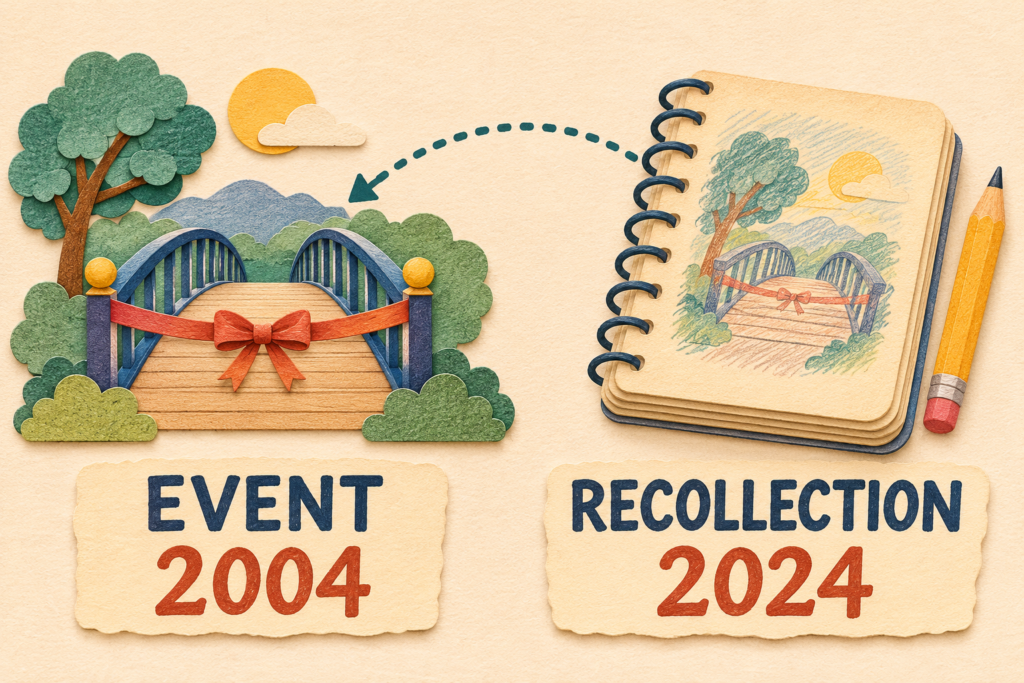
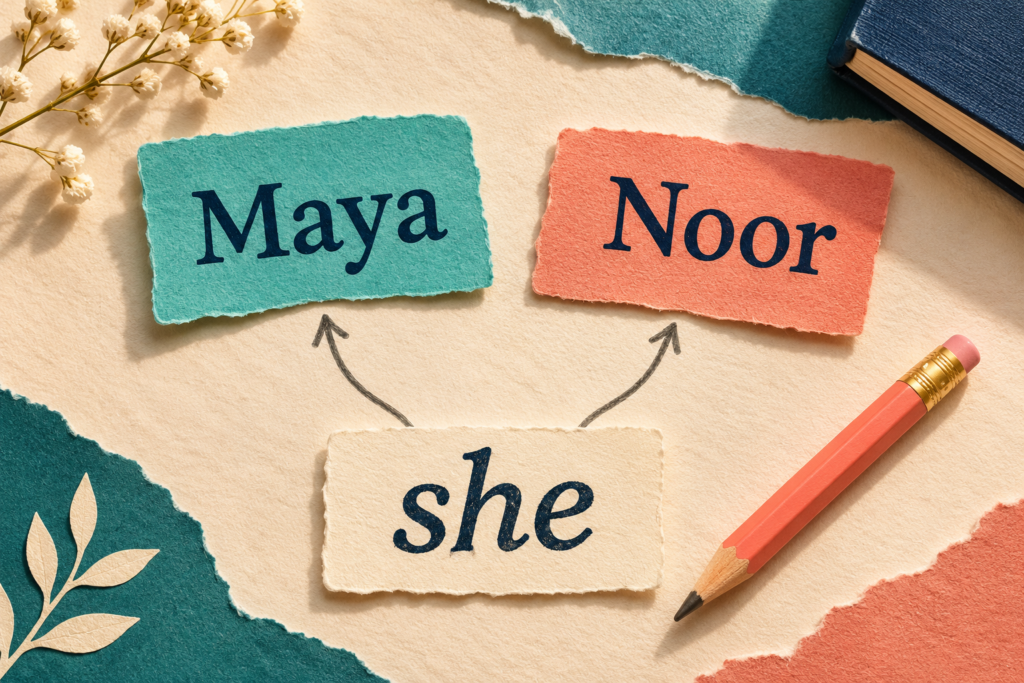
What needs to match before feedback is released?
A teacher has reviewed an English response, then receives a revised file. Some comments still look plausible: they name the same task, refer to paragraph two and use the student’s original wording. Before those comments go out, someone needs to establish which submission they belong to. A careful judgement about an earlier draft can become confusing advice on a later one.
For a school or faculty, agree where staff find the response selected for review, the task instructions and the criteria that apply. Follow the school’s submission and assessment process when deciding whether a replacement is accepted. The newest file is not automatically the authorised submission, and a date or filename alone does not establish that the file was the one reviewed.
The Australian Framework for Generative AI in Schools places decision-making responsibility with teachers and school leaders and includes testing and monitoring. The checking routine below is an original practical application, not a mandated form or a tested intervention. It applies to human-written, copied and AI-assisted feedback. All passages, responses and comments in the example are invented; none is an output attributed to a product.
Can you spot the mismatch in these two English drafts?
Use this original passage: “Nora left the last chair beside the open door. When the visitors arrived, she pulled it to the table and turned its seat towards them.” The practice task is: explain how Nora’s actions suggest her attitude towards the visitors. For this exercise, the criteria are a supported interpretation and an explanation of relevant details.
Draft 1 has three numbered paragraphs. Paragraph 1: “Nora’s actions suggest that she wants the visitors to join her.” Paragraph 2: “She is angry because the visitors are late.” Paragraph 3: “She turns the chair towards them. This directs the spare seat towards the visitors and makes her earlier decision to leave a chair near the door seem like preparation for their arrival.”
Draft 2 has two numbered paragraphs. Paragraph 1: “Nora’s actions suggest that she wants the visitors to join her.” Paragraph 2: “She turns the chair towards them. This directs the spare seat towards the visitors and makes her earlier decision to leave a chair near the door seem like preparation for their arrival.” The unsupported claim about anger and lateness has been removed; the former third paragraph is now second.
The draft feedback says: “In paragraph 2, remove the claim that Nora is angry because the visitors are late. The passage does not establish either point.” Before reading on, decide whether this instruction should accompany Draft 2. Find the words it refers to, rather than assuming the paragraph number still identifies them.
Why is changing the paragraph number not enough?
The instruction fits Draft 1’s unsupported claim. It does not fit Draft 2, where that claim is absent. Changing “paragraph 2” to another number would not repair it: there is no remaining sentence to target. Hold the old instruction, confirm that Draft 2 is the accepted response, then inspect that response against the task before writing or retaining feedback.
A defensible observation for Draft 2 is: “Your interpretation is supported by the movement of the chair towards the visitors, and you explain how the earlier placement can be read as preparation.” This describes evidence in the current response. It does not need to invent a new weakness to replace the deleted one. It also does not establish a grade or settle criteria beyond this practice task.
Now consider a different old comment: “Your opening identifies a welcoming attitude.” The opening is unchanged, so this comment might still fit. Check its meaning against the current complete response and task before retaining it. Neither discarding every old comment nor keeping every comment on unchanged text substitutes for that review.
For other kinds of error, the guide to feedback that sounds precise but is wrong shows how to test a claimed omission, a proposed correction and an extra requirement. Version matching is one check within that wider review.
How should a faculty handle an unresolved version?
Keep the affected feedback unreleased while the responsible teacher checks the submission record. Identify the exact response they reviewed and the response now awaiting feedback. If a replacement’s status is unclear, resolve it through the school’s normal process; do not silently choose whichever file makes the comments look right. Keep access to student work within the school’s approved arrangements.
Check the task and criteria too. A comment prepared for an earlier task instruction may be misplaced even when the response file is unchanged. For example, if an accepted task amendment changes the focus from attitude to structure, merely relabelling the feedback will not show that the response has been assessed against the amended demand. Establish which instruction applies, then review the affected judgement.
Use the record below to name the mismatch, the person resolving it and the evidence that will close it. “Checked versions” is too vague. “Teacher confirmed accepted response R2 in the submission record; feedback F1 targeted a sentence only in R1; F2 reviewed against R2 and task T1” explains what happened. This is an illustrative record, not a required naming convention.
A wider rehearsal can use the school AI pilot checklist to record which review and release steps staff have actually tried. An orderly version record alone does not demonstrate that a feedback service is reliable.
What should staff check on a fresh example?
Try this second original passage: “Amir folded the invitation and placed it beneath his notebook. When his sister asked about the party, he changed the subject.” The task asks how Amir’s actions suggest reluctance to discuss the invitation. Draft A reads: “Putting the invitation beneath the notebook hides it from view. Changing the subject also avoids discussing it.” Draft B keeps the first sentence only.
A comment prepared for Draft A says: “You connect two actions to the same interpretation.” Would you retain it unchanged for Draft B? Explain your decision, then write an accurate observation. This time the revision removes supporting evidence; it does not remove an unsupported claim as in the Nora example.
Check your answer: Draft B explains one action, not two, so the old description no longer fits. A suitable observation is: “You connect hiding the invitation with keeping it out of view.” A possible next step is to explain how changing the subject also supports the interpretation, if that is the useful next step for this learner and task. Establish that Draft B is the response to review before giving that advice.
Finally, suppose the correct Draft B is open but the feedback says Amir tears up the invitation. The versions match; the comment is still wrong. The passage says he folds it. Staff should be able to explain both findings rather than treating a successful file check as approval of everything in the feedback.
What evidence closes the check?
Before release, the reviewer should be able to retrieve the accepted response and applicable task, point to the evidence behind each retained comment, and identify the feedback version the student will receive. Check the actual release view or document through the approved workflow. A corrected working copy is not enough if an older attachment remains selected for sharing.
Retain the brief decision record in the appropriate school location, with enough detail to explain the resolution. Avoid copying identifiable responses into a general faculty training document. If the mismatch affects feedback already released or a mark, follow the school’s correction and assessment process; this pre-release practice exercise does not determine that process.
If your school is considering JeddAI, use a school enquiry to discuss how your staff will identify submissions, review comments and control release. Bring an invented example such as the two drafts above and ask to see the relevant workflow. Confirm what fits your school’s requirements before making a decision.
| Check | Finding and action |
|---|---|
| Response selected for review | Draft 2, once the teacher confirms it is the accepted submission. |
| Comment’s evidence | Anger and lateness occur only in Draft 1 paragraph 2. |
| Current text | Draft 2 removes that claim and renumbers the explanation of the chair. |
| Decision | Do not release the stale instruction. Review Draft 2 against the applicable task before preparing feedback. |
| Remaining check | The current response and every retained or revised comment still need an accuracy and task-fit check. |
| Field | Record |
|---|---|
| Accepted response and location | Exact version/reference; who confirmed acceptance: ______ |
| Task and criteria | Applicable instruction and criteria version: ______ |
| Feedback under review | Exact version and disputed wording: ______ |
| Evidence of the mismatch | Where the comment’s evidence appears, or why it is absent: ______ |
| Resolution and owner | Hold / revise / retain after review; who acts and why: ______ |
| Release check | Accepted response, reviewed feedback and actual release view matched by/date: ______ |